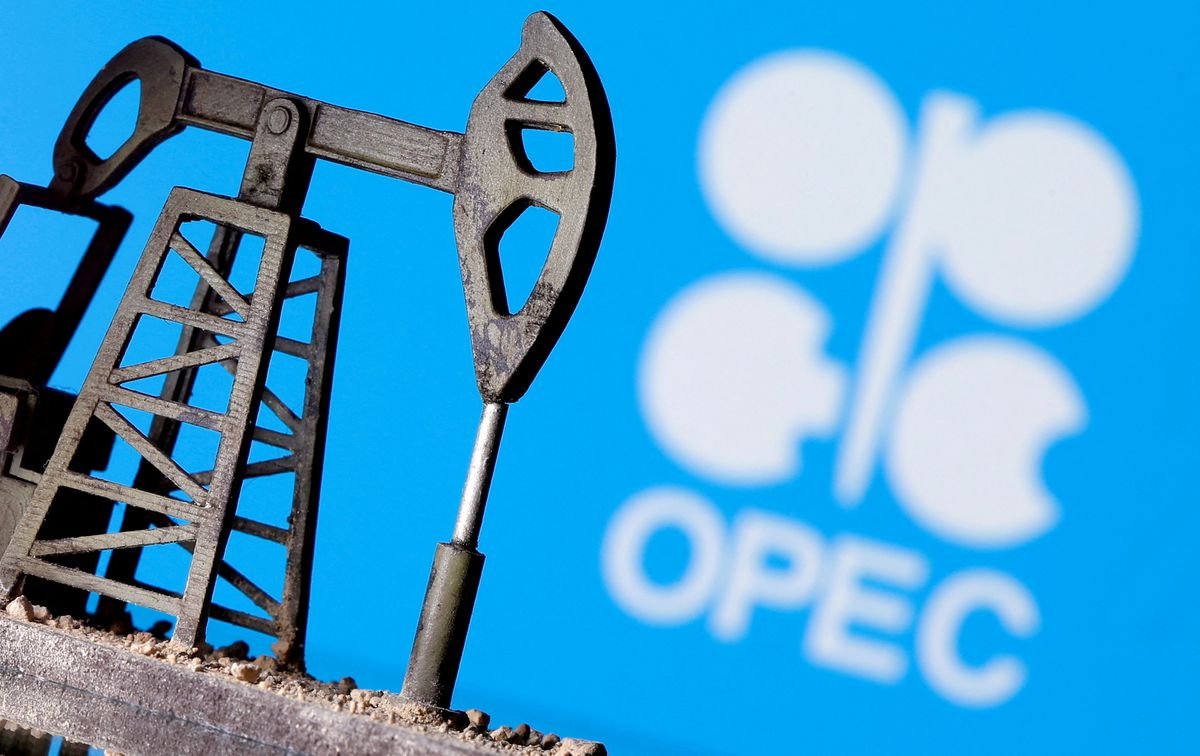
OPEC+ has agreed to raise its collective oil production targets by 188,000 barrels per day (bpd) starting in August, marking a fifth consecutive monthly increase as crude exports from the Strait of Hormuz gradually recover. This decision comes as Brent crude prices have retreated to pre-war levels, reflecting market anticipation of increased supply following a recent de-escalation in regional tensions.
The latest OPEC+ output hike, while seemingly modest, signals a cautious return to normalcy for Middle East crude supply after months of disruption caused by regional conflict and the effective closure of the Strait of Hormuz. For energy markets, this move, coupled with the UAE's independent production surge, intensifies the focus on actual export volumes and global demand recovery, particularly from Asia.
Executive Summary
Seven core OPEC+ members, including Saudi Arabia and Russia, will implement a 188,000 bpd production adjustment in August, building on nearly 800,000 bpd of increases since April. This comes as Gulf oil exports, severely hampered by the US-Israeli war on Iran and the resulting Strait of Hormuz blockade, are showing signs of recovery following a memorandum of understanding between Washington and Tehran. Despite the announced increases, actual production remains below pre-conflict levels, with OPEC+ output falling to 33.13 million bpd in May from 42.77 million bpd in February. Concurrently, the UAE, having exited OPEC+ in May, has independently boosted its crude production to a record 3.8-4.1 million bpd in June, adding further barrels to a market already seeing prices near $72/bbl.
What Happened
OPEC+ ministers convened virtually on Sunday, July 5, 2026, and decided to increase their collective output target by 188,000 bpd for August. This follows similar monthly increments since April, totaling nearly 800,000 bpd, aimed at gradually unwinding earlier production cuts. The decision coincides with the partial reopening of the Strait of Hormuz, which had been largely closed to tanker traffic during the recent US-Israeli war on Iran, severely restricting Gulf crude exports.
Key Developments
- OPEC+ Output Hike: Seven OPEC+ members will increase oil production by 188,000 bpd from August 2026, continuing a series of gradual supply additions.
- Hormuz Reopening: The Strait of Hormuz is gradually reopening for oil exports following a US-Tehran memorandum of understanding, easing previous supply constraints.
- UAE Production Surge: The UAE, after exiting OPEC+ in May, achieved record crude production of 3.8-4.1 million bpd in June, adding significant independent supply to global markets.
Regional Context
The Middle East crude supply landscape is undergoing a significant shift, with OPEC+ attempting to manage a fragile recovery in exports from the Strait of Hormuz while navigating the independent policy of the UAE post-OPEC+ exit. Regional energy policy is now balancing collective output adjustments with individual national interests and the imperative to restore export flows after a period of conflict-induced disruption.
Market Impact
Traders and refiners are observing a loosening crude market, with Brent prices falling to around $72 per barrel, pressured by recovering Gulf supplies and lower Chinese imports. The return of more Middle East crude, alongside higher exports from non-OPEC+ producers and strategic stock releases, suggests a potential global oil surplus by 2027, challenging market stability.
Outlook
The immediate market focus remains on the pace of actual export recovery through the Strait of Hormuz and the strength of global oil demand, particularly from key Asian importers. Further OPEC+ policy adjustments and Iraq's push for higher quotas will be critical watchpoints as the group prepares for its 2027 capacity review.