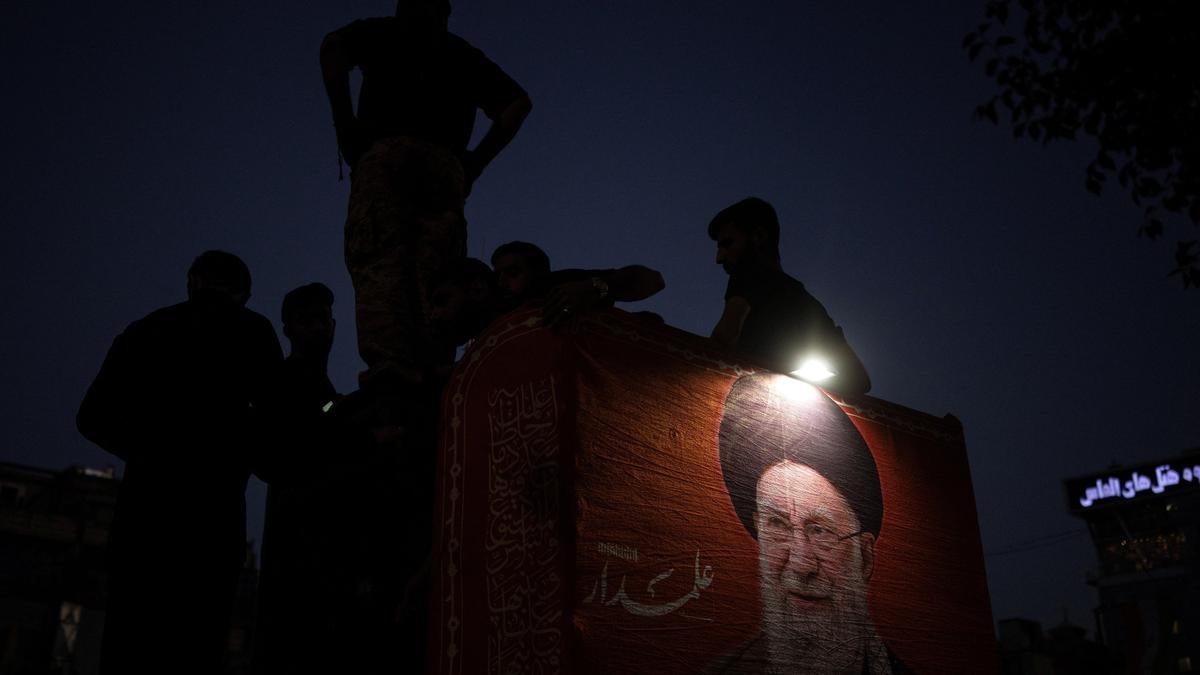
Renewed hostilities between the United States and Iran threaten to upend the International Energy Agency's (IEA) forecast for a significant oil market surplus in 2027, raising concerns over global supply stability. This escalation, occurring just weeks after a fragile peace agreement reopened the Strait of Hormuz, casts a shadow over crude and liquefied natural gas (LNG) flows vital to Asian markets.
The immediate re-escalation of conflict in the Middle East, particularly around the Strait of Hormuz, is critical for energy markets as it directly impacts the transit of approximately 14 million barrels per day of crude and significant LNG volumes. While June saw some recovery in supply after the Strait's reopening, the renewed fighting on July 7-8 introduces severe uncertainty, potentially leading to tighter global balances and higher prices, especially for import-dependent Asian economies.
Executive Summary
The IEA had previously anticipated a global oil market surplus next year, a forecast now jeopardized by the latest US-Iran clashes. The Strait of Hormuz, a crucial chokepoint, had only recently seen a partial resumption of crude flows, which had been severely curtailed during the peak of the conflict, impacting up to 14 million barrels per day. This renewed instability could lead to sustained elevated crude prices, which were already around $77 per barrel for Brent at the time of the IEA report's publication, and further complicate Asia's energy security landscape. Moreover, the transit of LNG tankers, including 22 Japan-linked vessels, through the Strait has resumed but remains vulnerable to the ongoing tensions.
What Happened
Hostilities between the United States and Iran escalated again on July 7-8, following a brief period of calm after a mid-June peace agreement that had allowed for the reopening of the Strait of Hormuz. This renewed fighting has prompted the International Energy Agency to warn that its projection for a 2027 oil market surplus is now at risk. The Strait's earlier closure had significantly disrupted global crude flows, and its partial reopening in June offered temporary relief before the latest flare-up.
Key Developments
- IEA Outlook Clouded: The International Energy Agency's forecast for a 2027 oil market surplus is now threatened by renewed US-Iran hostilities.
- Hormuz Vulnerability: The Strait of Hormuz, critical for 14 million bpd of crude, faces renewed disruption risks after a brief reopening in June.
- Asian Energy Security: Escalating tensions directly impact Asian crude and LNG imports, with Japan-linked vessels already navigating the volatile region.
Regional Context
For Asia, heavily reliant on Middle Eastern crude and LNG, the persistent instability in the Strait of Hormuz poses a direct threat to energy security and economic stability. The region's refiners and importers, having just begun to adapt to the Strait's partial reopening, now face renewed uncertainty over supply routes and pricing.
Market Impact
Traders will closely monitor crude benchmarks, with Brent already around $77 per barrel, as supply uncertainty could drive further price volatility. Asian refiners, many configured for Gulf crudes, face potential operational challenges and higher input costs if flows are again constrained or rerouted. Analysts will be reassessing global supply-demand balances, particularly the likelihood of a 2027 surplus, given the heightened geopolitical risk premium.
Outlook
The market's focus will remain squarely on de-escalation efforts and the sustained, unimpeded transit through the Strait of Hormuz. Any further intensification of the US-Iran conflict could trigger significant upward pressure on oil and LNG prices, forcing Asian buyers to seek more costly alternative supplies.